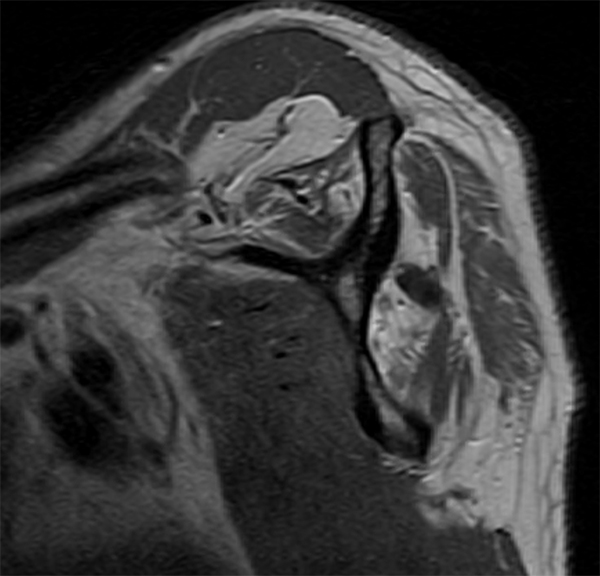
A laborer in his 50s came to my office today with complaints of left shoulder pain. He had injured it a year ago in a fall and had initially seen another provider who gave him a cortisone shot. He had been doing reasonably well but continued to have pain and weakness and tried to work through it . He eventually saw his primary doctor and got an MRI before being sent to me, again almost a year later. On exam the man was very weak when I tested his rotator cuff. On MRI the patient had a massive rotator cuff tear with development of atrophy (fatty infiltration) of his rotator cuff muscles. Whereas we probably could have fixed his rotator cuff a year ago and he would have likely been healed, the tear was now no longer repairable. Thankfully, I am able to offer him a recently developed reconstructive procedure called a lower trapezius transfer, which has been very successful for treating these types of patients in salvage situations.
This story underscores 2 issues. The first issue is that if you have a traumatic injury, especially if it is associated with weakness or loss of motion, you should get an MRI, not an injection. Unfortunately, many well-meaning providers are quick to provide injections to give patients temporary relief but this can often be detrimental to fixing a time sensitive issue. A traumatic rotator cuff tear is a fixable problem, but often only if you get to it within a reasonably short period of time. Once a few months have passed it might be too late and there is evidence that an injection could make it harder for that tendon to heal. Although I can still help this patient, I can’t help to feel like there was a missed opportunity here.
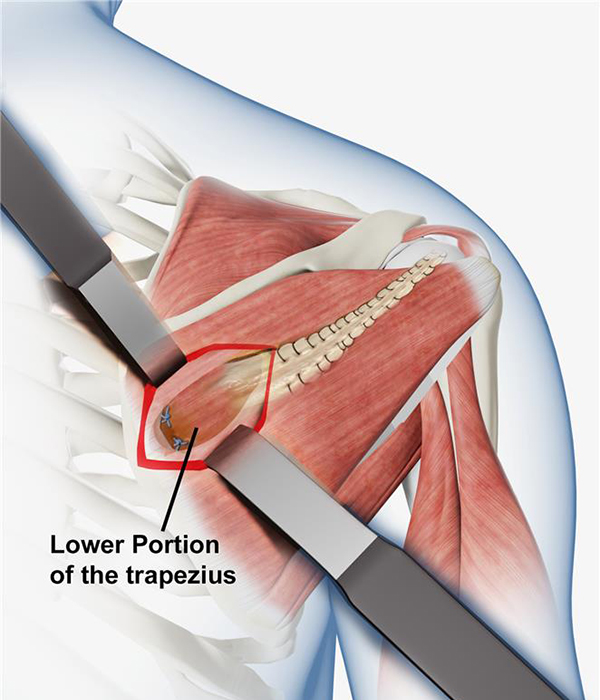
The second issue involves a discussion of the young patient with a massive rotator cuff tear. There are endless debates on this topic but options can include non-operative treatment for those who are tolerating the symptoms, fixing the tear with or without graft augmentation, tendon transfers, or reverse shoulder arthroplasty. The tendon transfer mentioned above (lower trapezius transfer) involves taking a muscle from the back of the shoulder blade and, with the help of a cadaver Achilles tendon, use it replace the missing rotator cuff tendon. It was first developed by Dr. Bassem Elhassan and his colleagues a little over a decade ago and it has been an amazing tool for restoring function in these challenging patients. This patient is too young in my opinion to get a reverse shoulder replacement and we hope to get him back to his heavy work. While the tendon transfer surgery can save the patient’s joint from undergoing a shoulder replacement, this surgery will change his anatomy and scapular mechanics and it will take at least 6 to 9 months to heal. The good news is that there is a light at the end of the tunnel thanks to Dr. Elhassan’s innovative procedure.